Ethereum developers have launched the Kohaku roadmap
Ethereum’s developers have officially launched the Kohaku roadmap, a framework set to redefine how wallets safeguard user data and assets. Announced this week by Nicolas Consigny, a leading coordinator at the Ethereum Foundation, Kohaku is designed from the ground up for developers and power users seeking more control and confidentiality in managing digital assets.
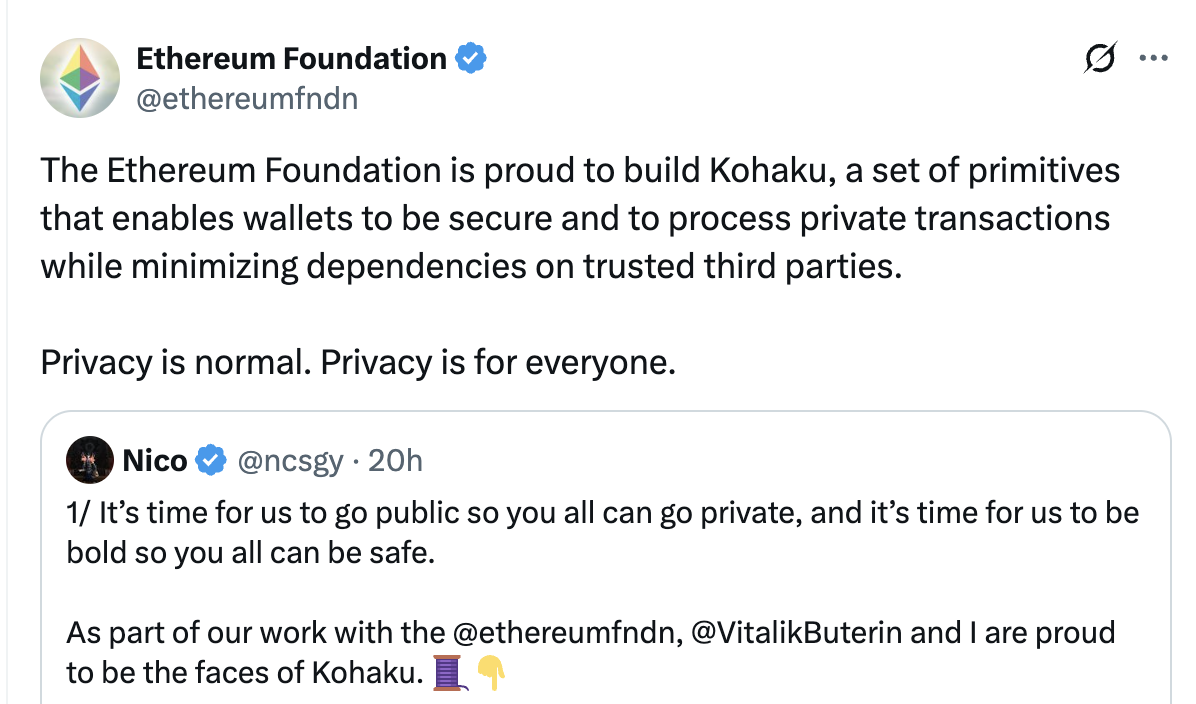
Image Source: Ethereum Foundation
Privacy and Decentralization
Announced in early October 09, 2025, Kohaku is more than a set of tweaks for wallet software. Instead, it sets forth a roadmap deliberately shaped by feedback from the Ethereum community and an expanding cluster of privacy-centric developers. The framework is built around a software development kit (SDK) that makes integrating strong privacy and security features straightforward, allowing wallet builders to simply “plug in” new capabilities as needed.
The reference implementation, showcased as a browser extension built on the Ambire wallet, is tailored especially for sophisticated users and developers. By default, Kohaku avoids centralized services that typically track wallet transactions. Instead, it leans on open-source collaboration, inviting contributions from teams like Ambire, Railgun, DeFi Wonderland, Helios, Oblivious Labs, and Walletbeat.
Key Features
Kohaku’s engineering vision revolves around modular, security-first tools. Among its core innovations:
1. Private Sending and Receiving: Transactions can be sent or received without revealing wallet addresses or transaction metadata. Peer-to-peer broadcasting further sidesteps traditional RPC servers, eliminating many centralized tracking risks.
2. IP Address Masking: Integrated traffic masking and local light clients let users interact without leaking identifying network data.
3. Separate DApp Accounts: Instead of one wallet address tied to all applications, users can create distinct, isolated accounts for each DApp, compartmentalizing data and sharply reducing cross-platform leaks.
4. Social Recovery Options: Kohaku supports advanced recovery methods such as ZK Email and Anon Aadhaar, utilizing zero-knowledge proofs and privacy-preserving identity systems to restore wallet access without giving up personal data.
5. Post-Quantum Cryptography: Future iterations will feature cryptographic algorithms designed to resist quantum computing threats, ensuring wallet security as technology evolves.
6. Hardware Wallet Integration: Open reference models empower hardware wallet manufacturers to avoid vendor lock and offer direct privacy solutions compatible with Kohaku’s tools.
Addressing Today’s Challenges
The privacy and security battle in decentralized finance is ongoing. Kohaku directly tackles issues that have plagued major wallets for years: centralized RPC reliance, metadata surveillance, and the cumbersome nature of account recovery. By offering developers pluggable privacy modules and autonomous verification clients, the Kohaku framework aims to make security seamless without sacrificing usability.
Moreover, the plugin approach allows wallets to add new privacy features as protocols evolve; for example, plug-ins for private reads and writes, cryptographic recovery models, and zero-knowledge hardware signers. This flexibility assures that Ethereum wallets will not be frozen in time, but instead can keep pace with fast-moving threats and user demands.
Community-Driven Development
Perhaps the most compelling angle of the Kohaku initiative is its commitment to open development. The SDK, reference wallet, and all supporting tools are publicly available for contribution. This ensures the roadmap remains transparent, adaptive, and resilient to the rapidly shifting world of Web3 innovation. By inviting broad participation, Ethereum not only democratizes privacy technology but sets higher standards across the blockchain sector.
Looking Ahead
With Kohaku, the Ethereum Foundation and its partners aim to make privacy and security routine, not rare. The resulting wallet framework will enable stronger user autonomy, efficient recovery, and protected transactions for everyone from seasoned builders to everyday wallet holders. As Ethereum accelerates into 2026 and beyond, Kohaku could change not just how wallets operate, but how everyone thinks about privacy on the blockchain.


Leave a Comment