OCC Exposes Shocking Debanking
The Office of the Comptroller of the Currency (OCC) has uncovered that nine of America's biggest banks systematically debanked cryptocurrency companies between 2020 and 2023. This revelation, detailed in the OCC's latest enforcement actions and risk assessments, highlights a hidden war on digital assets by traditional finance giants wary of regulatory heat and reputational risks. As crypto rebounds in 2025 under a pro-innovation Trump administration, this news reignites debates over banking access and the future of decentralized finance.
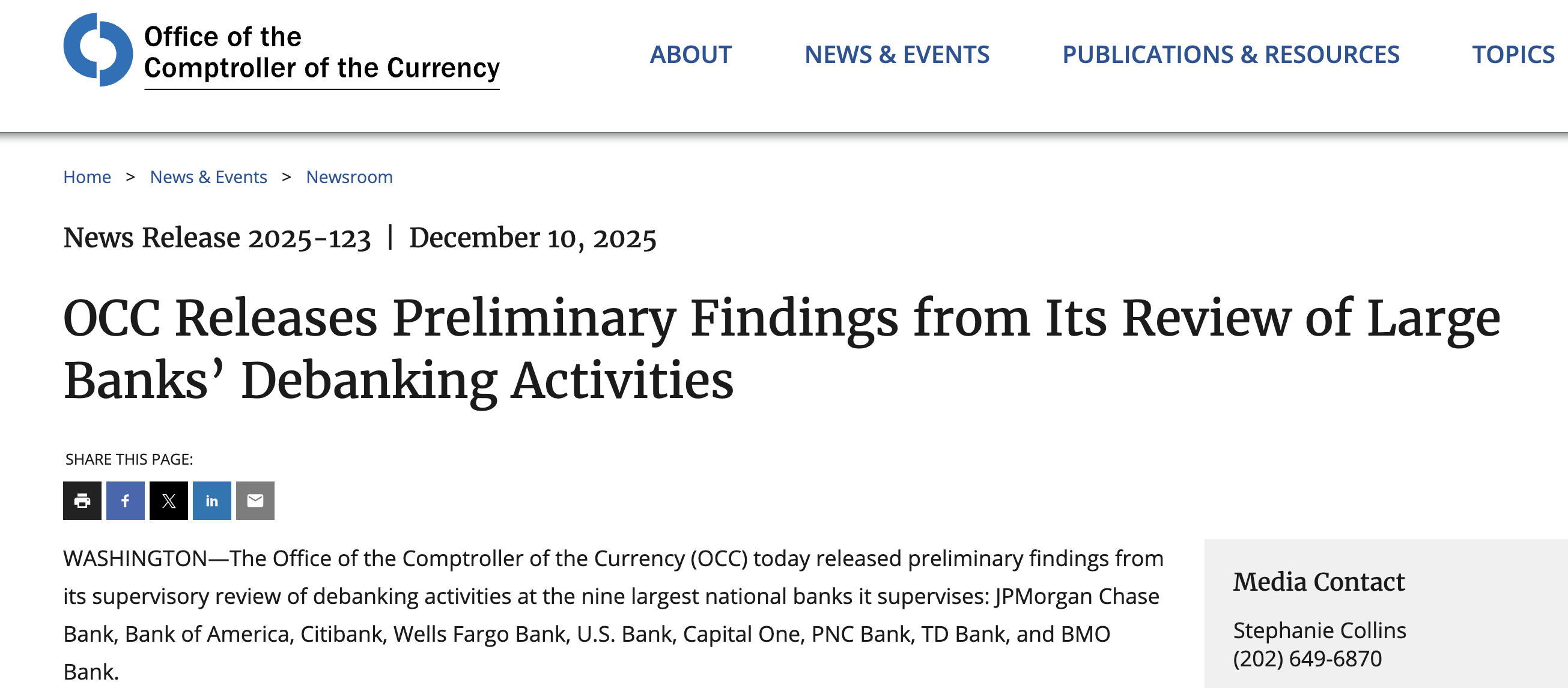
Image Source: OCC
The Debanking
The OCC's investigation, spanning multiple years of banking records, pinpointed nine unnamed "major" institutions including names like JPMorgan Chase, Bank of America, and Wells Fargo- that abruptly severed ties with over 100 crypto-related clients. From 2020's DeFi summer boom to the 2022 FTX collapse, these banks cited "heightened compliance risks" under AML/KYC rules, but insiders whisper it was more about dodging SEC scrutiny amid Gary Gensler's crackdown era. Documents show routine account closures for exchanges, mining ops, and NFT platforms, even those with spotless records, forcing many into offshore banking or crypto-native rails. The OCC flagged this as "unfair discrimination," noting banks profited billions from crypto custody fees while starving innovators of fiat on-ramps.
Why Banks Pulled the Plug
Fear was the real driver. Post-FTX, banks faced OCC consent orders demanding ironclad BSA/AML controls, and crypto's volatility screamed "high-risk" to risk officers. JPMorgan's own 2020-2022 filings admitted to "de-risking" digital asset clients, echoing industry-wide caution after Binance and Coinbase enforcement actions. Regulatory whiplash banks paralyzed, opting for the nuclear option: total debanking. Yet these same banks launched their own blockchain pilots, like Citi's token services and BofA's private ledgers, all while slamming the door on pure-play crypto firms. The OCC report slams this double standard, urging "risk-based" approaches over blanket bans, and hints at fines looming if patterns persist into 2025.
Ripple Effects on Crypto
The fallout was brutal. Startups scrambled for alternatives, boosting the adoption of non-custodial wallets and DeFi protocols. U.S. innovation lagged Europe and Asia, where banks like Revolut embraced crypto. Investor confidence tanked too; VC funding dipped 30% in 2022 partly due to "banking black swan" fears. But silver linings emerged: offshore hubs flourished, and U.S. policy shifts post-2024 elections promise relief via stablecoin bills and lighter-touch OCC guidance.
A Turning Tide in 2025?
Fast-forward to today: With President Trump's crypto-friendly appointees at Treasury and OCC, debanking probes could yield settlements and mandates for fair access. The OCC vows "enhanced supervision" to balance innovation and safety.


Leave a Comment