SEC Greenlights Generic Listing Standards for Commodity and Digital Asset ETFs
The U.S. Securities and Exchange Commission (SEC) has approved generic listing standards for commodity-based exchange-traded funds (ETFs), including those holding digital assets. This regulatory breakthrough was announced on September 17, 2025, promises to significantly accelerate the listing and trading process of crypto ETFs in the United States.
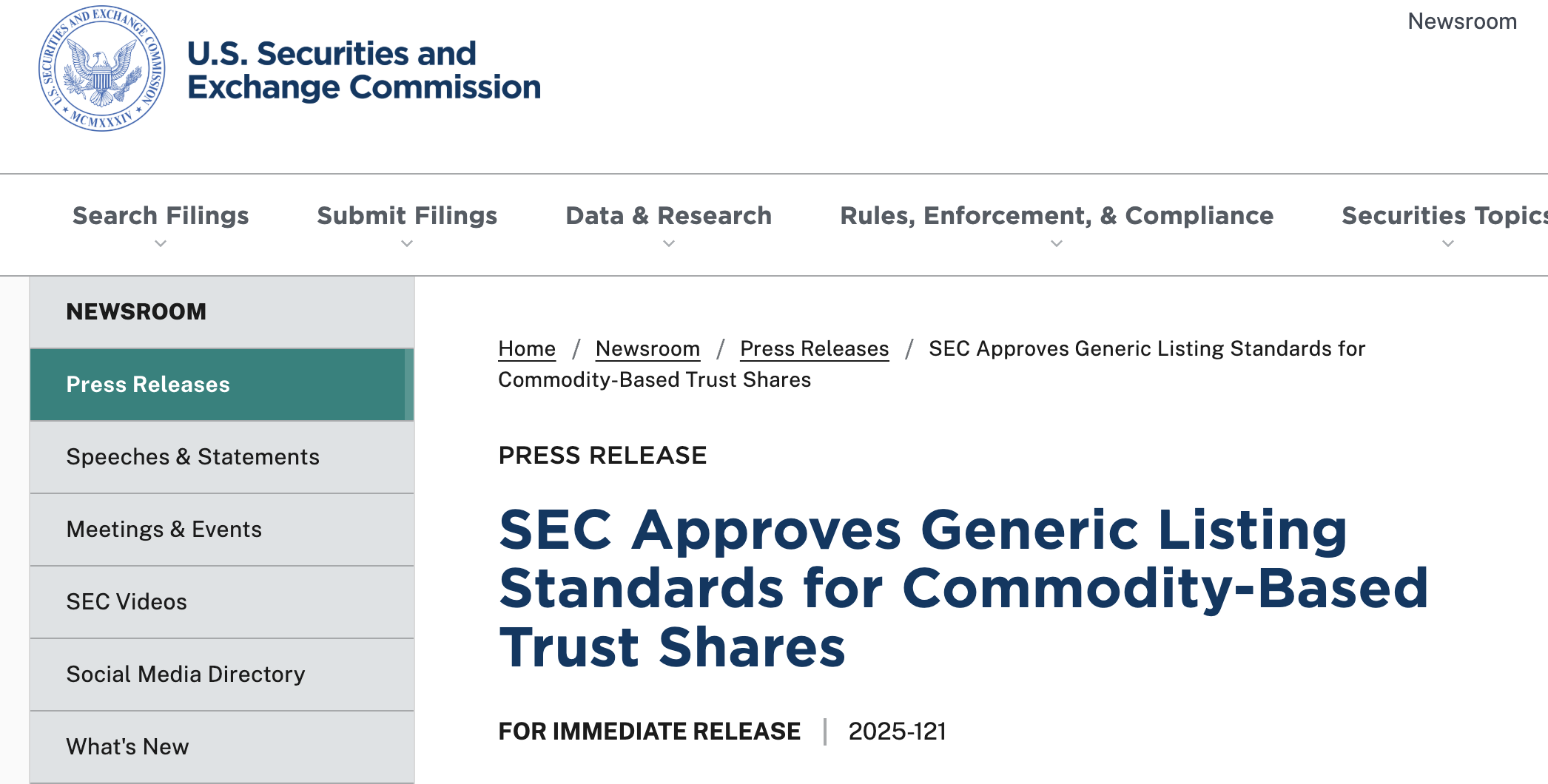
Image Source: SEC
What Are Generic Listing Standards?
Previously, any new ETF listing involving commodities or digital assets required individual SEC approval that could stretch for several months, entailing multiple rounds of reviews and public comment. The newly approved generic listing standards allow three national securities exchanges Nasdaq, NYSE Arca, and Cboe to list and trade commodity-based trust shares, including cryptocurrencies, without submitting a separate proposed rule change for each ETF. This streamlined process falls under the SEC’s authority via Section 19(b) of the Securities Exchange Act, bypassing the need for case-by-case agency approval if the ETF meets predefined standards. SEC Chairman Paul S. Atkins highlighted the significance of this move by stating, “By approving these generic listing standards, we are ensuring that our capital markets remain the best place in the world to engage in the cutting-edge innovation of digital assets.”
What this Means for Crypto ETFs
Crypto funds have long suffered under extended regulatory scrutiny, limiting market access mainly to Bitcoin and Ethereum-based ETFs after years of drawn-out legal and regulatory battles. The newly adopted standards are designed to open the door for a broader spectrum of cryptocurrencies and diversified baskets to be listed quickly, reliably, and transparently. One immediate beneficiary is the Grayscale Digital Large Cap Fund (ticker: GDLC), which has received SEC approval for listing under the new framework. This fund holds a diversified mix of prominent digital assets, including Bitcoin, Ethereum, XRP, Solana, and Cardano, all tracked via the CoinDesk 5 Index. This multi-token ETF approval marks a critical advancement, offering investors regulated access to a basket of crypto assets rather than single tokens, thereby introducing diversified exposure within a traditional investment structure. Additionally, the SEC authorized the listing and trading of p.m.-settled options on the Cboe Bitcoin U.S. ETF Index and Mini-Cboe Bitcoin U.S. ETF Index, signaling greater support for crypto derivatives in regulated markets.
Regulatory Clarity
The approval also brings much-needed regulatory clarity praised by industry experts and investors alike. Jamie Selway, Director of the SEC’s Division of Trading and Markets, noted that these generic listing standards provide a rational, rules-based approach that balances innovation with investor protections. By replacing ad hoc approvals with clear eligibility criteria, the SEC aims to support market integrity, transparency, and oversight, paving the way for innovation to flourish in a secure environment. Key eligibility requirements for crypto ETFs under the new rules include the underlying digital asset being traded in a regulated futures market for at least six months. These conditions help ensure liquidity, market surveillance, and risk mitigation measures remain in place, addressing concerns that had previously slowed regulatory approvals for spot crypto ETFs beyond Bitcoin and Ethereum.
What’s Next?
The change significantly compresses lengthy approval timelines that once extended up to 240 days, potentially reducing them to a matter of weeks. Analysts anticipate a wave of new crypto ETFs, especially those tracking popular altcoins like Solana, XRP, Dogecoin, Avalanche, Chainlink, and others, that have been patiently awaiting SEC approval. Industry voices see this move as a catalyst for institutional adoption and broader retail investor access. At the same time, asset managers and issuers acknowledge further operational steps remain, including drafting marketing strategies, legal filings, and compliance checks in alignment with the new standards. However, the regulatory momentum signals a more open and innovation-friendly environment than ever before.


Leave a Comment