Terraform Labs Sues Jump Trading for $4 Billion
Terraform Labs has launched a staggering $4 billion lawsuit against Chicago-based trading firm Jump Trading, marking one of the most dramatic legal turns in the ongoing fallout from the Terra crisis. The lawsuit, filed in a U.S. federal court, accuses Jump of fraud, market manipulation, and unjust enrichment tied to its role in propping up TerraUSD (UST) during its earlier de-pegging episodes, well before the catastrophic collapse in May 2022. This move signals a broader attempt by Terraform to rewrite the narrative around who bears responsibility for one of crypto’s most consequential failures.
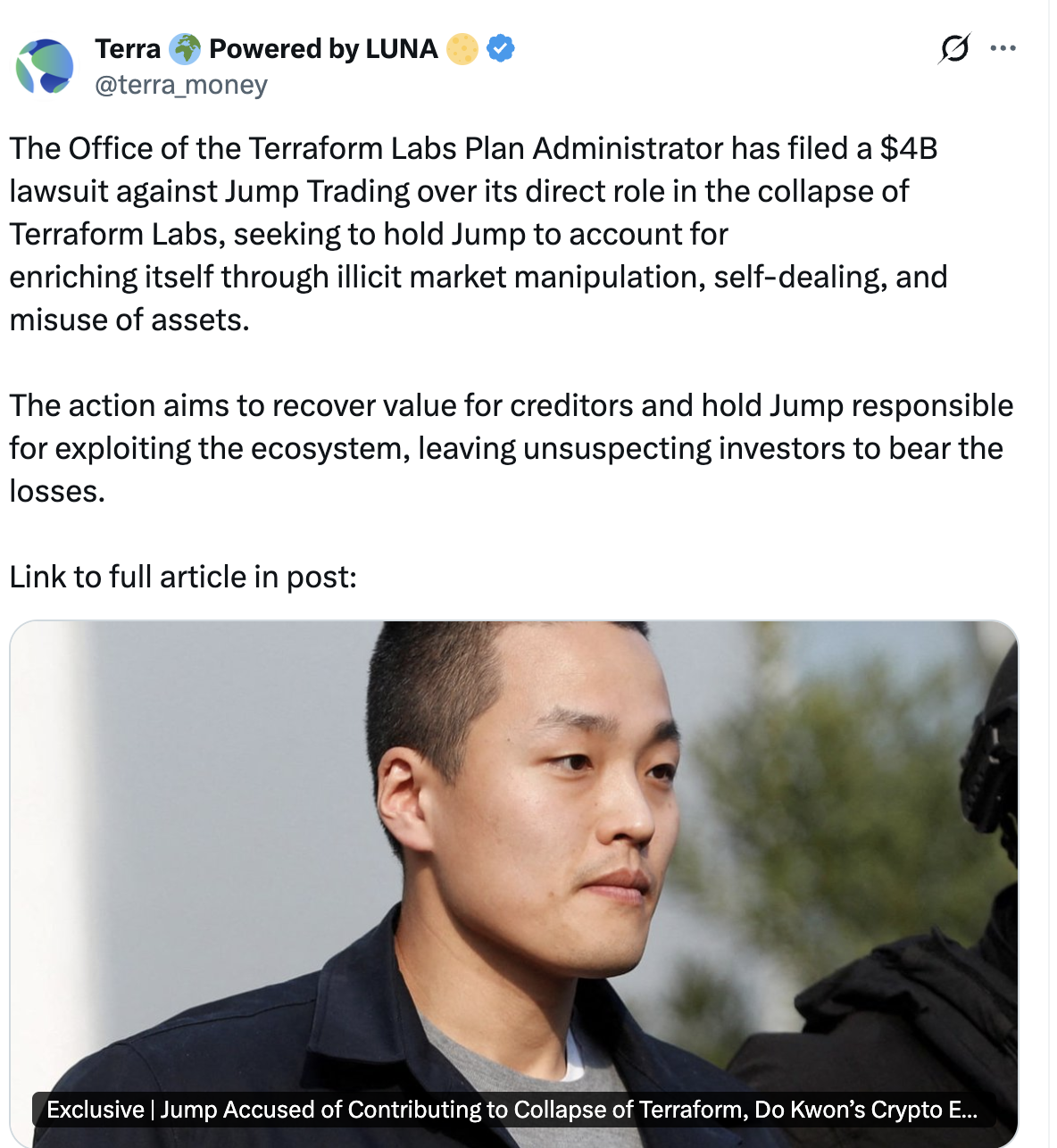
Image Source: Terraform Labs
Terraform’s Allegations Against Jump
According to the lawsuit, Terraform claims that Jump Trading entered into an agreement to support UST’s peg during early periods of stress in exchange for deeply favorable terms on LUNA tokens. The filing alleges that Jump acquired large quantities of LUNA at heavily discounted prices and then profited massively as UST briefly regained stability, all while retail traders remained in the dark about the extent of Jump’s intervention. Terraform Labs argues that Jump’s alleged secret trading strategies, preferential arrangements, and behind-the-scenes interventions not only distorted the market, but also shifted an outsized share of blame and regulatory pressure onto Terraform and its founder Do Kwon. Terraform contends that this arrangement created an uneven playing field in the market, where a sophisticated institutional player had access to non-public information and special incentives that ordinary investors never enjoyed. The company further alleges that Jump’s actions amounted to “covert market support” that artificially sustained confidence in UST and may have delayed an inevitable reckoning, ultimately amplifying the scale of the eventual collapse.
A Counteroffensive Amid Regulatory Pressure
The lawsuit also comes against a backdrop of intense legal and regulatory heat on Terraform Labs itself. The U.S. Securities and Exchange Commission (SEC) previously accused Terraform and Do Kwon of orchestrating a multibillion-dollar crypto fraud, arguing that the design and marketing of UST and LUNA misled investors. Terraform’s new legal salvo against Jump appears, in part, to be a strategic counteroffensive, an effort to argue that key institutional partners also played a critical role in the ecosystem’s instability and investor losses. By seeking $4 billion in damages, Terraform is not only pursuing financial relief but also trying to reframe public and legal perception of the Terra crash. The filing suggests that Terraform views Jump as more than just a liquidity provider; it portrays the firm as a central architect in the mechanics that kept UST afloat long enough for risks to compound.
What This Means for Crypto Markets
This lawsuit has implications that go far beyond the two companies involved. If the case proceeds, it could shine a harsh spotlight on how large trading firms operate behind the scenes in crypto markets, particularly in the context of stablecoins and algorithmic financial engineering. Questions about transparency, disclosure, and conflicts of interest will likely become central themes, especially if internal communications or detailed trading records are brought into the public record. For the broader industry, the dispute underscores how intertwined relationships between protocol issuers, market makers, and trading firms can become a legal minefield once things go wrong. It also reinforces a growing trend: regulators and courts are increasingly unwilling to accept opacity in the name of “innovation,” especially when retail investors bear the brunt of the losses.
Whats Next?
Market participants will now be watching closely to see how Jump Trading responds. The firm has previously faced regulatory scrutiny over its role in U.S. markets but has typically operated with a low public profile in the crypto space. A strong rebuttal, settlement talks, or motion to dismiss could each shape the trajectory of this case in very different ways. For Terraform Labs, this lawsuit is a high-risk, high-reward maneuver. If the court finds merit in its claims, it could redistribute some legal and moral responsibility for the Terra collapse. If not, it could reinforce the view that Terraform is attempting to deflect blame after one of the most damaging events in crypto history.


Leave a Comment